E você não está gerenciando nenhum deles
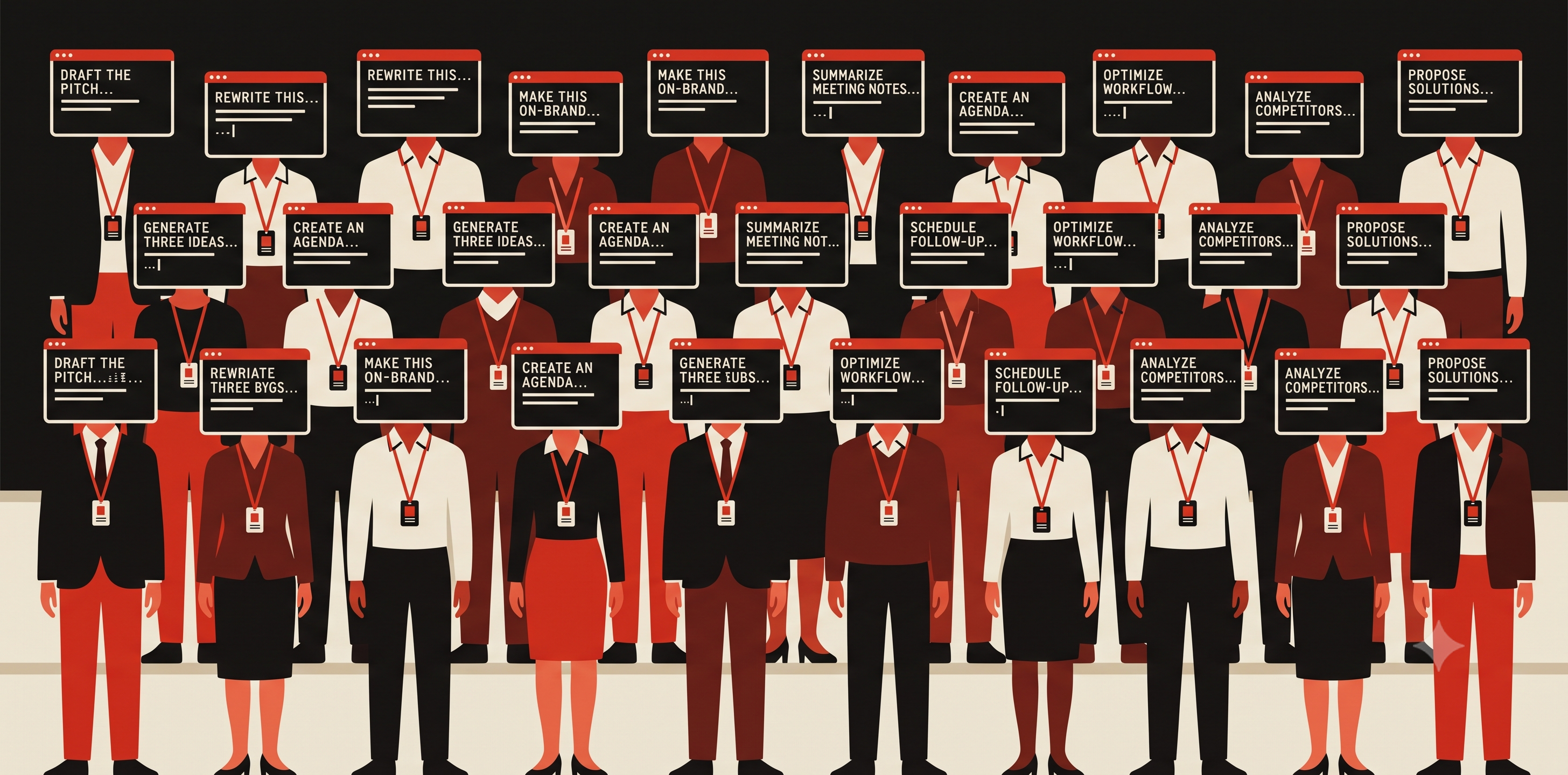
Em algum momento entre 2023 e agora, sem comitê de contratação, sem ciclo orçamentário, sem uma única linha no organograma, sua organização adquiriu milhares de novos produtores criativos. Todo funcionário com uma aba do ChatGPT aberta, uma assinatura do Claude, uma licença do Midjourney ou um login do Canva Pro é agora, na prática, um designer em atividade, um redator em atividade, um embaixador de marca em atividade e um porta-voz em atividade. Alguns deles você está pagando. Alguns estão pagando por si mesmos. Todos estão publicando.
Ninguém planejou isso. Simplesmente aconteceu, do jeito que mudanças geracionais em ferramentas sempre acontecem, por adoção, não por decisão. A consequência é que uma força de trabalho que costumava consumir ativos de marca agora os está produzindo, num volume que nenhuma equipe de marketing na história jamais precisou governar.
Você contratou dez mil designers juniores. Você não está gerenciando nenhum deles. O comprador está observando o resultado.
O organograma não assinado
Considere o caso tradicional. Quando uma empresa efetivamente contrata um designer júnior, há um processo. Alguém escreve um briefing. Há uma revisão de portfólio. O jurídico aprova. O RH faz o onboarding. Há um gestor, um grupo de pares, um sistema de design, um ciclo de revisão e um período de adaptação antes que o novo contratado tenha permissão para publicar trabalho voltado ao cliente. Mesmo assim, os primeiros seis meses são passados sob supervisão. Isso não é paranoia. É assim que organizações competentes protegem aquilo pelo qual o mercado as julga.
Agora considere o caso real. Uma líder regional de vendas em Frankfurt tem uma assinatura do Claude que seu gestor desconhece. Ela a usa para redigir apresentações de propostas, reescrever e-mails de pitch e gerar resumos de estudos de caso que envia a potenciais clientes. Parte disso é boa. Parte não é. Tudo isso sai sob o seu logotipo. Ninguém revisou nada disso. Ninguém jamais lhe disse como sua marca soa, no sentido de lhe dar uma regra que ela pudesse aplicar. Ela está improvisando, com competência, e tudo o que ela envia agora faz parte do seu corpus publicado, alimentando tanto os compradores que o leem quanto os modelos que vão resumi-la amanhã.
Multiplique essa líder regional por cada pessoa na empresa com um LLM no bolso. Esse é o seu novo chão de produção. Ele é invisível para o seu organograma. É invisível para a sua equipe de marca. Ele é, neste momento, invisível para quase todo mundo, exceto o comprador.
O que os designers juniores recebem, e o que os funcionários potencializados por LLM não recebem
Um designer júnior devidamente integrado recebe, no mínimo, quatro coisas. Uma definição de marca por escrito, específica o suficiente para ser aplicada. Um sistema de design funcional, com tokens e templates reais. Um processo de revisão que detecta desvios antes da publicação. Ciclos de feedback que transformam correções em aprendizado.
O funcionário potencializado por LLM não recebe, no mínimo, nada disso. Ele recebe uma assinatura, um login e o incentivo para usá-la "por produtividade". O que produtividade significa, na prática, é produção criativa não supervisionada em escala industrial, calibrada pelos dados de treinamento de um modelo, e não pelo posicionamento real da sua marca.
Isso não é uma falha do funcionário. É um vácuo de governança. O funcionário está fazendo exatamente aquilo para o qual foi incentivado: ser mais rápido, produzir mais, soar mais inteligente. Ninguém lhe disse qual é a sua voz. Ninguém lhe deu tokens que ele pudesse usar. Ninguém definiu as balizas dentro das quais sua nova imaginação tem permissão para vagar.
Eles estão improvisando com base nos padrões do modelo. Os padrões do modelo são as médias do setor. As médias do setor são, precisamente, aquilo que faz todo mundo na sua categoria soar igual.
O resultado é a sua marca agora
Há uma defasagem na forma de pensar da maioria dos executivos que vale a pena nomear. Líderes ainda tendem a pensar em "marca" como aquilo que o marketing publica: a campanha, o site, o relatório anual. Isso talvez fosse verdade quando o marketing controlava a maior parte da superfície voltada para fora. Não é mais o caso.
Sua marca é atualmente definida pelo resultado agregado de cada funcionário potencializado por LLM que produz material voltado ao cliente, mais tudo o que o marketing publica, mais tudo o que os modelos dizem sobre você quando ninguém da sua empresa está na sala. A fatia do marketing nesse bolo vem encolhendo há uma década. Os funcionários potencializados por LLM são a fatia que mais cresce. Os modelos estão consumindo o que sobra.
O que significa que a pergunta de governança mudou de lugar. Não é mais "como gerenciamos a equipe de marketing". É "como gerenciamos as dez mil pessoas que não sabíamos ter contratado."
Quatro medidas para uma equipe executiva
Reconheça que isso aconteceu. A primeira medida é admitir que a mudança na força de trabalho ocorreu. Todo funcionário agora é um nó de produção criativa, independentemente de seu cargo refletir isso ou não. Tratar isso como um problema de marketing ou uma questão de política de TI é um erro de categoria. É uma questão de governança em escala de força de trabalho, o que a coloca no nível executivo.
Dê a eles uma especificação. A resposta de maior alavancagem é construir um sistema de marca que qualquer funcionário possa consumir sem precisar de permissão ou treinamento. Voz codificada. Biblioteca de posicionamentos. Tokens de design. Corpus publicado. Tudo o que um sistema de marca de verdade contém, mas entregue de uma forma que um funcionário com um LLM possa efetivamente usar, sob demanda, no fluxo do trabalho. Não um PDF num drive compartilhado. Um prompt que ele possa colar. Uma folha de estilos que um modelo possa consumir. Uma página que diga, em doze linhas, como a sua marca soa.
Aplique no ponto de produção, não no ponto de publicação. A aplicação depois do fato é punição. A aplicação dentro da ferramenta é coerência. Sempre que possível, incorpore o sistema de marca às interfaces que os funcionários já estão usando, de modo que as balizas sejam ambientes, e não opcionais.
Nomeie um responsável sênior o bastante para importar. Alguém na mesa executiva precisa responder pela coerência do resultado produzido pelos dez mil designers juniores. Em algumas organizações, esse alguém é o CMO. Em outras, é o COO. Em outras, é o CEO. Em nenhuma delas, em 2026, é ninguém. "Ninguém" é o padrão atual, e está produzindo exatamente os resultados que seria de esperar.
Fechamento
A mudança generativa não alterou apenas as ferramentas do marketing. Ela alterou o quadro de pessoal do marketing, sem pedir permissão. Sua organização está agora produzindo mais conteúdo de marca do que jamais produziu, a partir de mais fontes do que jamais monitorou, com um nível de coerência que reflete o fato de que ninguém disse a nenhum dos novos produtores como seria essa coerência.
Isso tem conserto. Requer tratar a força de trabalho potencializada por LLM como uma força de trabalho de fato, com a governança real que uma força de trabalho real exige. Também requer que a equipe executiva perceba que contratou uma.
Você contratou dez mil designers juniores.
Gerencie-os.
A Plan B constrói sistemas de marca que podem ser consumidos por qualquer funcionário com um LLM, sem treinamento. Se você quiser saber como é um desses, nós fazemos isso.