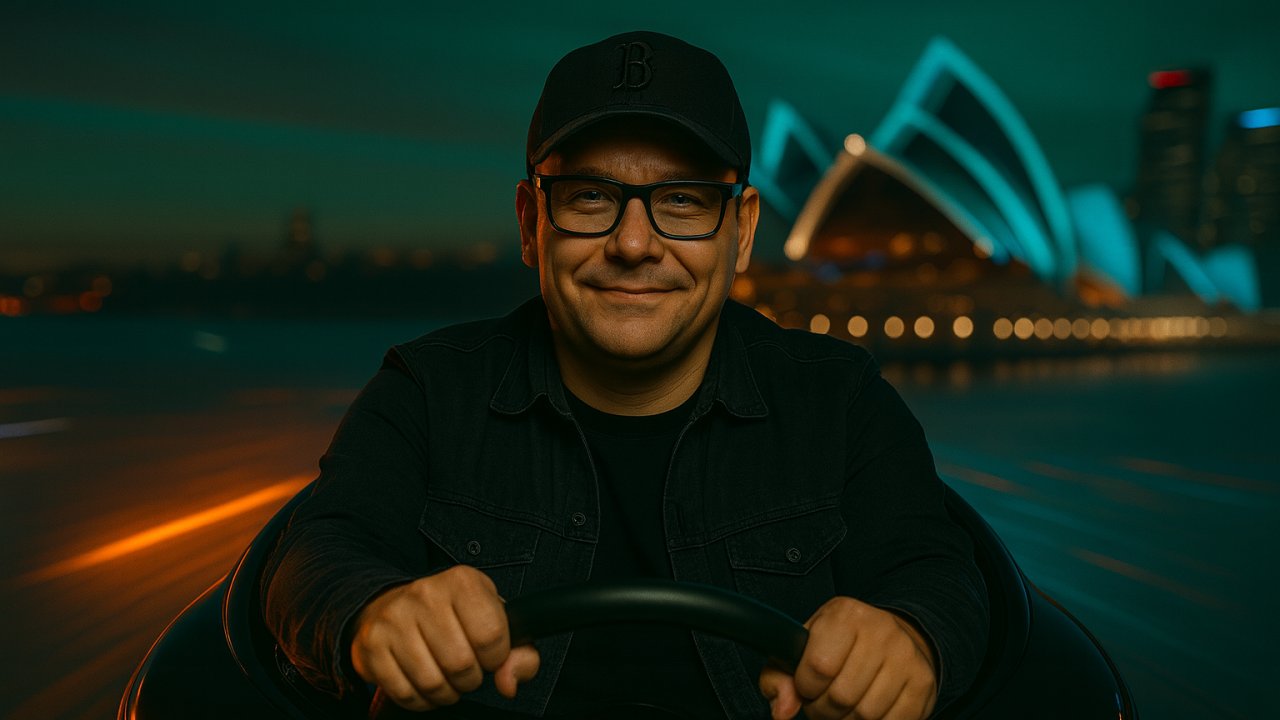
<p>It is a small, selfish dream to float above the crawl. Gliding home on clean power toward the future we were promised.</p><p><br></p><p>It sums up the whole problem of action on climate. We do not want less. We want better. We want progress without the punish.</p><p><br></p><p>The best worst thing about Fortescue was time spent with scientists who knew the science and were still building more proof in the face of disbelief.</p><p><br></p><p>In 1965, Lyndon Johnson told Congress that fossil fuel use was changing the atmosphere. In 1979, the Charney Report quantified it. Double carbon dioxide, warm the planet. The First World Climate Conference that same year told governments to act.</p><p><br></p><p>We knew. And we kept going.</p><p><br></p><p>Floods that used to be once in a century now happen once or twice a decade. Cities stop breathing under sticky heat. The ocean absorbs our excess and grows hungry. The warnings have turned into weather. Methane is outgassing. Carbon sinks are failing.</p><p><br></p><p>Scare tactics have not shifted minds. But do not worry, things are going to get worse.</p><p><br></p><p>TikTok doomers dramatise the impact of growing up hopeless beautifully. Childhood activists ask sharp questions about the ongoing preference for profit next quarter over everything else.</p><p><br></p><p>Weirdly, there is hope in that. The climate question is no longer moral. It is economic.</p><p><br></p><p>At COP26 in Glasgow, the Glasgow Financial Alliance for Net Zero announced that 130 trillion US dollars — around 40 percent of global financial assets — were aligned to net zero goals.</p><p><br></p><p>Since then, the International Energy Agency has counted more than three trillion dollars a year in energy investment, two trillion for clean power. Renewable spending now outpaces fossil fuels. And for the first time in history, clean energy investment will more than double fossil fuels by 2025.</p><p><br></p><p>More people now work in clean energy than in fossil fuels, about 35 million compared to 32 million. Solar costs have fallen 90 percent since 2010. Wind by 70 percent. The cheapest new power on Earth is renewable.</p><p><br></p><p>Akaysha Energy is building the Waratah Super Battery to keep Sydney running if the grid falters. In California, grid batteries supplied 20 percent of peak demand during heatwaves last year. Sweden's HYBRIT project delivered fossil-free steel for Volvo. China now drives half of global solar and EV investment, lowering costs for everyone. In the United Kingdom, one hundred percent of excess load was recently powered by wind and solar.</p><p><br></p><p>Projects like these are appearing everywhere. Not symbolic. Practical.</p><p><br></p><p>The economics of decarbonisation have landed. The money is moving. The question is why it is not moving faster.</p><p><br></p><p>Because invention is no longer the bottleneck. Implementation is.</p><p><br></p><p>Permitting, transmission, and interconnection all lag years behind the capital waiting to deploy. Competence is now the constraint.</p><p><br></p><p>The climate community says it is ready for unity, but in an attention-flooded world too many want to be climate famous. Even the apocalypse has its cliques.</p><p><br></p><p>Meanwhile, real work continues. Electrify what can take a plug. Build wires faster than you write strategies. Make heat without fire. Stop pretending offsets can magic away physics. Price the harm, and protect the people who did not cause it.</p><p><br></p><p>The grid we have was built for one-way power flow. The grid we need must handle two-way data, variable storage, and real-time balancing across millions of sources. That is not ideology. That is engineering.</p><p><br></p><p>I see the romance in restraint. The gentle less. Ride the bike. Take the train. Eat the beans. Pet the alpacas.</p><p><br></p><p>But these acts are punctuation, not paragraphs. Even if every household in the OECD went net zero tomorrow, global emissions would fall by less than 10 percent. You cannot change enough lightbulbs on your own to rebuild an energy system.</p><p><br></p><p>Eat the steak, and log those miles behind Eleanor's 400 horses while you still can. Then demand that the largest industries drive the fastest change.</p><p><br></p><p>Decarbonisation is not a vow of poverty. It is an engineering challenge with a timer.</p><p><br></p><p>The future is not smaller. It is different. Large, low-cost renewables offer predictable input costs for the world's biggest productive assets. The market will reward that model as a new lever in the value chain.</p><p><br></p><p>Fossil fuel demand has not peaked everywhere, but investment already has. The transition is not waiting for belief. It is already the default setting for capital.</p><p><br></p><p>I still want my hovercar. I want it electric, built with minerals mined by people who were paid properly, powered by a sky that is growing less angry. I want progress that feels like progress.</p><p><br></p><p>We will not be rescued by purity or slogans. We will be rescued by competence, capital, and coordination. By people who can make physics profitable. By decisions repeated until they stop feeling heroic and start feeling normal.</p><p><br></p><p>The next decade will not be won by the loudest ideas, but by the most competent ones. The companies that treat decarbonisation as a creative brief, not a compliance exercise, will lead. The future belongs to those who make it work beautifully, efficiently, and profitably.</p><p><br></p><p>That is the real green transition. Not away from desire, but toward doing it better.</p><p><br></p>