I booked a one-way ticket back to Shanghai with a short Mandarin course under my belt and no real plan.
That sentence sounds braver in retrospect than it felt at the time. At the time it just felt necessary.
I had visited China the year before and the pace and scale of it stunned me in a way I could not explain to anyone who had not stood in it. New Zealand had given me big skies and room to think. Shanghai gave me something different. A city that was actively becoming. You could feel the momentum in the concrete.
So I went back.
---
My first job there was with a publishing company. I needed to understand how Chinese teams worked from the inside, not the outside. The pay was modest. The education was not.
When a cash crunch delayed salaries, I had a decision to make. My colleague and I looked at each other and said the same thing without saying it. If we were not going to get paid anyway, we might as well work for ourselves.
That is how ConfuciusSays started. Not with a business plan. With a cash flow problem and a decision.
---
The idea was simple enough to fit on a napkin. Brands grow faster when they connect to real culture, not stereotypes of it.
China in the early 2000s was full of foreign brands trying to look Chinese and looking nothing of the sort. Red lanterns. Dragons. Calligraphy they did not understand. The whole apparatus of surface-level localisation that told Chinese consumers, clearly, that the brand had not actually bothered.
We did the opposite. We went deep. We hired people who lived in the culture. We built from the inside out.
The first big client was 42 Below, a New Zealand vodka that had no right to work in Shanghai and worked beautifully. We took a brand built on irreverence and found where irreverence lived in that city. It was not hard. Shanghai has always had a taste for it.
Bacardi eventually acquired 42 Below for US$152 million. The first bottle they noticed was sitting in a D&G bar they had paid millions for, and we had slipped onto the back bar doing a favour. Chinese guanxi at work.
---
I brought the Black-Eyed Peas to China with Chivas based solely on my ability to find a bourbon and coke at ten am. I worked across eight provinces and nine Asian countries. I learned things you cannot learn in a market that is comfortable with you.
Here is what I mean.
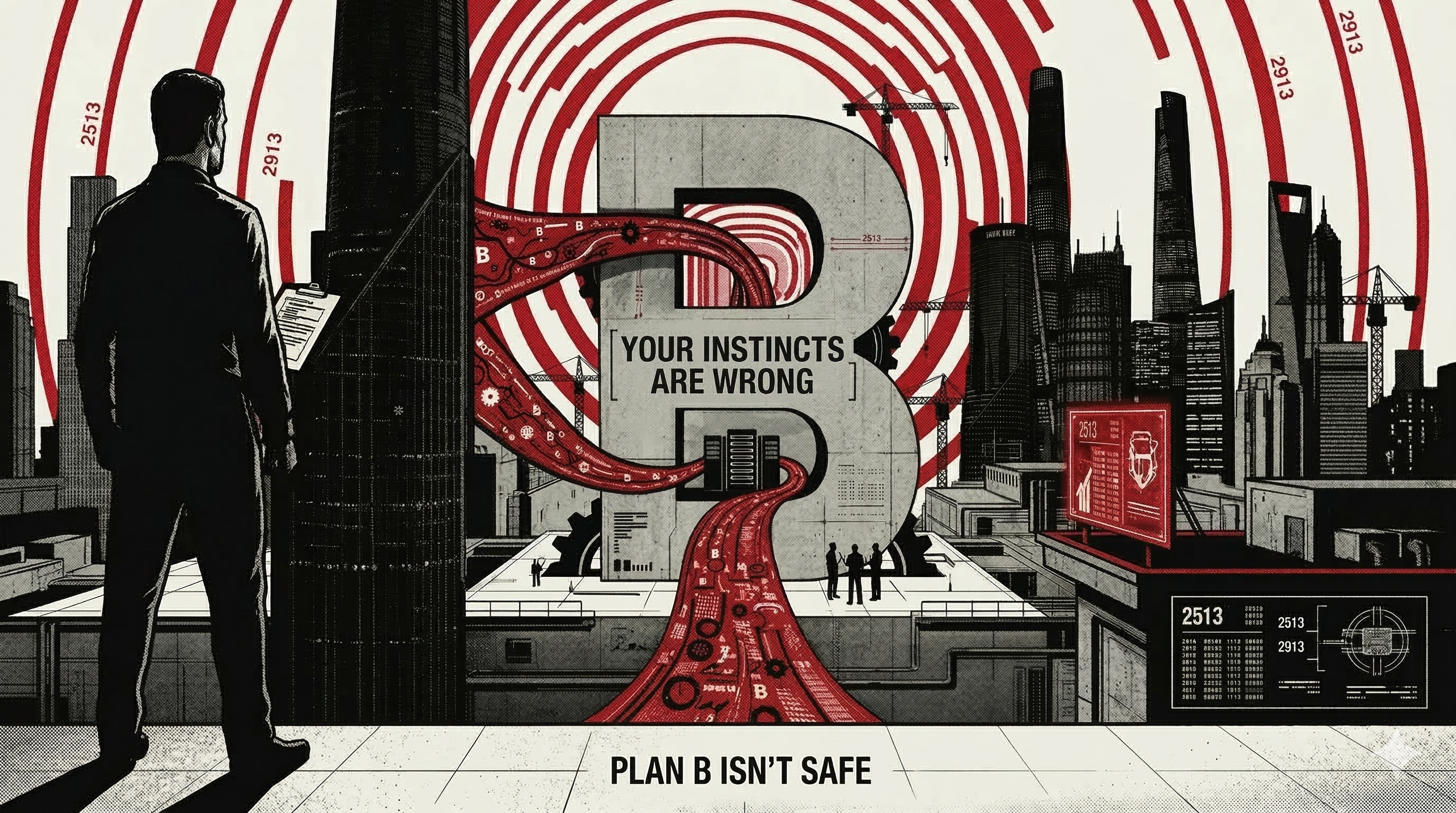
A comfortable market lets you be approximate. Your instincts are roughly calibrated to it. You understand the subtext. You know what a room means when it goes quiet. You can feel when an idea is landing and when it is not. You make the mistake of believing your opinions are relevant.
A market that bites back strips all of that away. Your instincts are wrong. Your subtext is missing. The room goes quiet and you have no idea why. You are operating on pure observation and pure logic, with none of the emotional shortcuts you have spent a lifetime building.
That is terrifying. It is also, if you let it be, the best education available.
---
You learn to read signals rather than meanings. You learn to hold hypotheses loosely. You learn that confidence without evidence is just noise, and that in a market that does not know you, noise does not travel far.
You learn to build trust slowly and spend it carefully. Relationships in China are not networking. They are architecture. You build them over time, with patience and with proof, and they hold weight that a handshake in a Western market never could.
You learn that the beginner's mindset is not a philosophical position. It is a survival skill.
---
The GFC hit. The market shifted, and so did I. I landed in Sydney with clean air and clear skies and a set of instincts that had been rebuilt from scratch.
I have never stopped being grateful for that.
Every difficult market since, every client brief where the ground was unstable, every organisation in the middle of something it did not choose. I have approached the same way. Start with observation. Hold the hypothesis loosely. Build trust before you spend it. Read the signals, not the meanings.
These are not exotic skills. They are the ordinary tools of anyone who has had to operate outside their comfort zone long enough to stop expecting comfort.
---
The brands and businesses I have respected most since then are the ones that behave the same way. They do not assume they understand the market. They go and find out. They do not localise by swapping out the logo colours. They build from the inside.
The ones that bite back are never the ones you expected. They are the ones you did not bother to understand properly.
Shanghai taught me that, among many other things.
I am still learning it.